

Additive Manufacturing for Space
Space programmes share a demanding combination: very low production volumes, extremely high performance requirements, and components that cannot fail. It is an awkward fit for conventional manufacturing, where tooling costs are justified by volume. It is a natural fit for additive manufacturing, where they are not required at all.
The UAE's growing space sector manufacturing initiatives have made this capability increasingly relevant locally. 3DTIV supplies the systems, materials, and support required to build it.
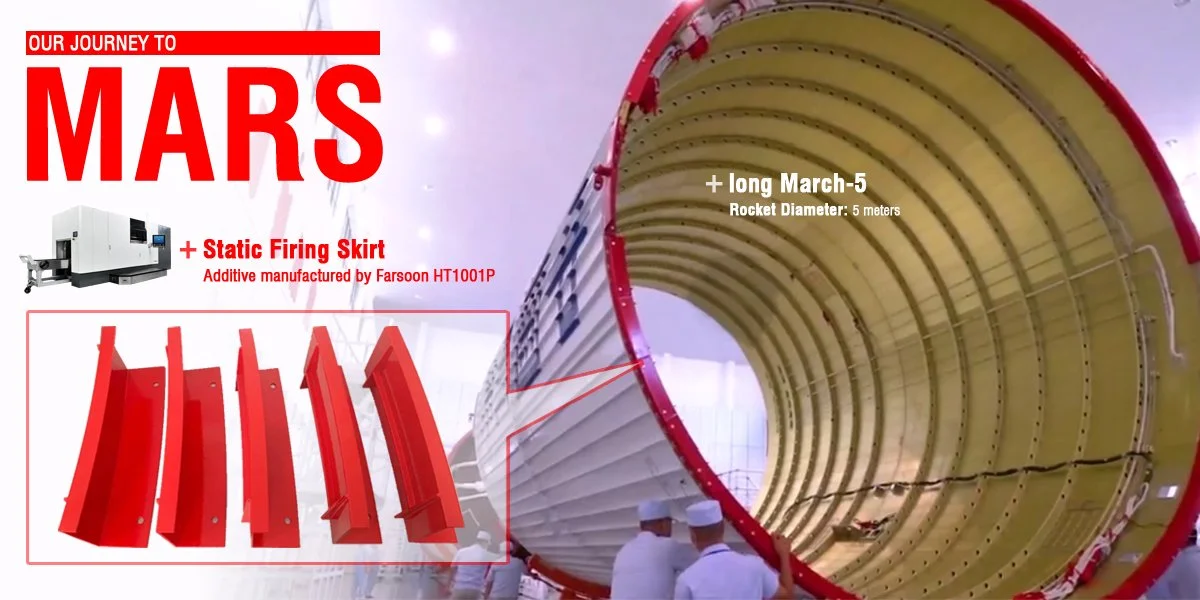
3D Printed Firing Skirt for a Rocket to Mars
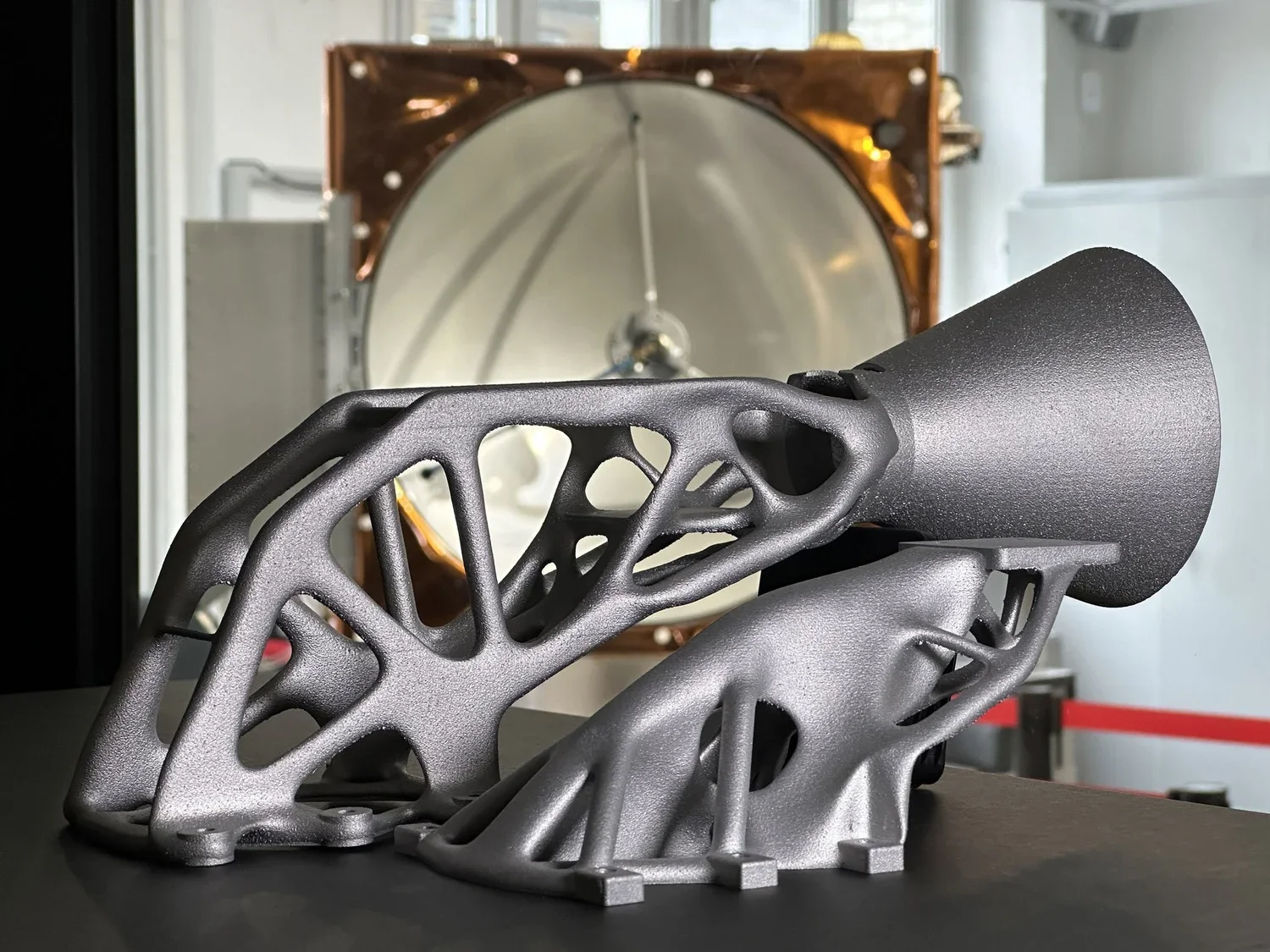
3D Printed Part for a Satellite
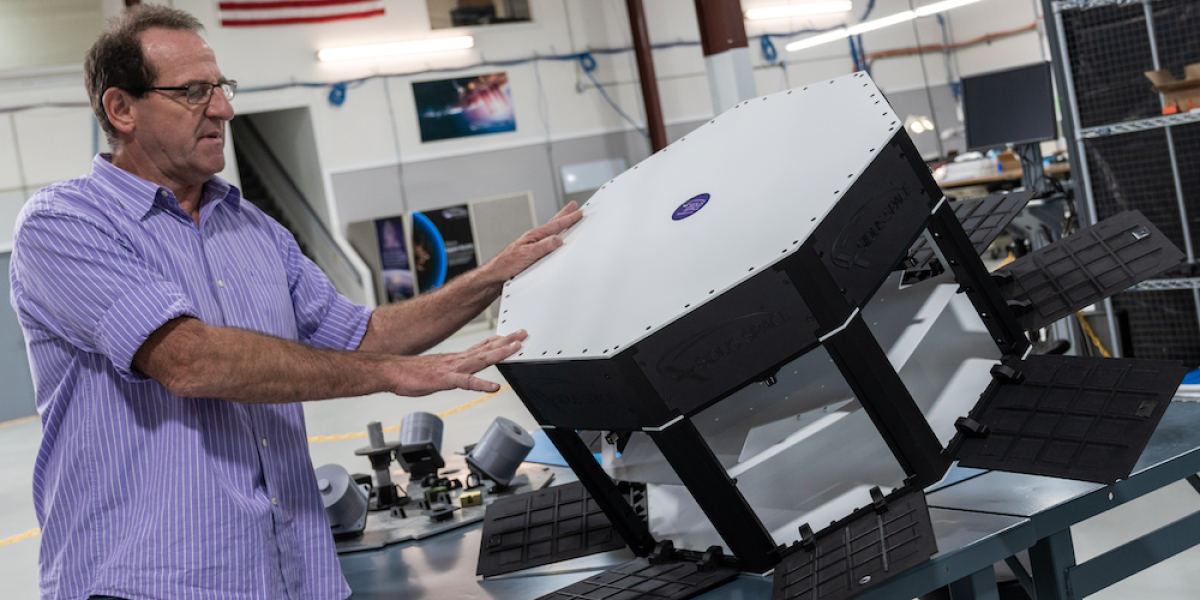
Fully 3D Printed Satellite
Why Space Programmes Use Additive Manufacturing
-
Propulsion and structural assemblies built from many joined components can be printed as single pieces, eliminating joins, seals, and fasteners that represent potential failure points.
-
Launch cost scales directly with mass. Topology-optimized structures deliver required strength at significantly reduced weight.
-
Regenerative cooling channels, integrated flow passages, and internal lattice structures that cannot be produced by machining or casting.
-
Design revisions move from CAD to tested hardware in a fraction of conventional timelines — critical where development schedules are compressed.
-
Components produced regionally rather than sourced through international supply chains, with the security and continuity advantages that carries.
These applications typically require large build envelopes, multi-laser throughput, and the ability to process reactive materials safely.
The FS721M offers a 720×420×420mm build volume with dual or quad 500W lasers for large-scale structural and propulsion components. The FS422M delivers a 425×425×550mm envelope with build rates to 150cm³/h and a permanent filter system with a lifespan exceeding ten years, rated for processing active materials. The FS421M handles powder supply, building, breakout, and sieving entirely under inert atmosphere, with high-capacity filtration for reactive material processing — an important safety consideration when working with titanium and aluminium powders.
Recommended Systems for Space Production
Materials for Space Applications
Farsoon's qualified metal portfolio includes titanium alloys for high strength-to-weight structural components, nickel superalloys for high-temperature propulsion applications, aluminium alloys for lightweight structures, and tool and stainless steels for ground support and test hardware.
Every material is developed, tested, and qualified specifically for additive manufacturing, with pre-loaded parameter sets producing consistent, predictable properties. Farsoon's open platform allows space programmes to develop and lock down their own qualified processes — often a requirement rather than a preference, where internal or customer qualification standards exceed manufacturer defaults.
3DTIV additionally distributes Forward AM materials, supporting polymer applications across ground support equipment, ruggedized housings, and test hardware where the material specification is set by the programme rather than the machine.
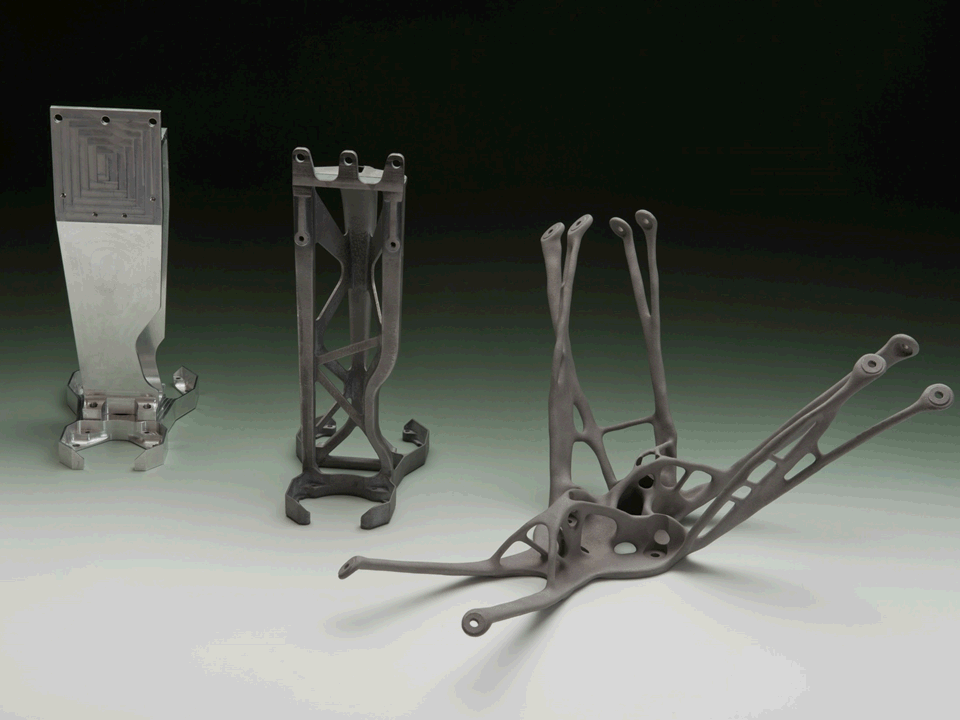
Customized 3D printed parts lends is ideal for
space applications
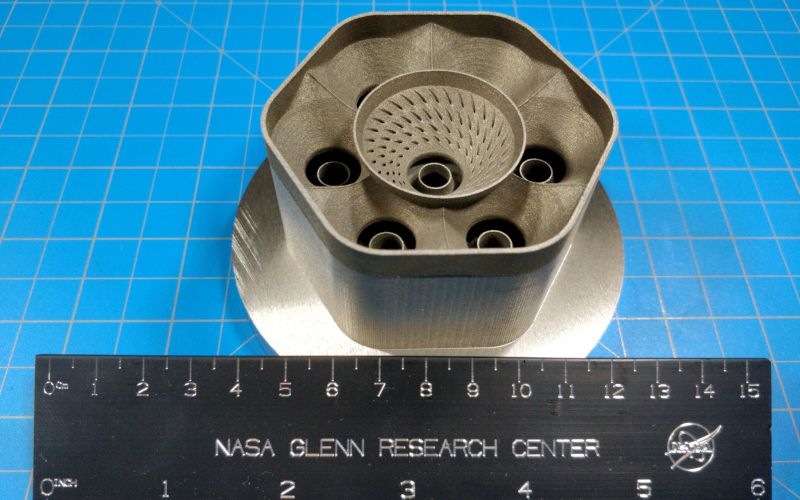
3D Printed turbine engine combustor (fuel-air mixer)
Fully 3D Printed Satellite
Book a demonstration
3DTIV is the exclusive partner for the sale and servicing of Farsoon Technology printers across the GCC, providing machines, qualified materials, operator training, and regional technical support.
For programmes where supply chain security and continuity matter, regional machine service and materials supply carry weight beyond convenience. Our Dubai demonstration centre allows engineering teams to benchmark their own components and validate process capability before committing to a platform.
Discuss your space programme application with our team